%2Ffit-in%2F250x250%2Fguide_websites%2F132954%2Fimages%2F1778308869880chatgptimagemay9202602_40_57pm.png&w=1920&q=100)
Brook Trout Fishing in Nipigon ON
Brook Trout Fishing in Nipigon - What to Expect
%2F%2Fusers%2Fc692c33b-e513-4185-b92b-c40eb5ab4ec1%2Fimages%2Fnipigon-brook-trout-fishing-tour-2749.jpeg&w=1920&q=75)
Fishing, Tours Adventures by Captain Gord Nuttall in July
-moxvhwf1.jpg)
Meet your Captain Gord Nuttall
- Nipigon6


Summary
Join Captain Gord Nuttall of Not-At-All-Indoors for a Monday, June fishing and tours adventure in Nipigon, Ontario. This guided trip targets brook trout in pristine northern waters, offering an unforgettable experience for anglers looking to land quality fish in a stunning natural setting.
Fishing with Gord Nuttall - Rates & Booking
Captain Gord Nuttall of Not-At-All-Indoors operates guided fishing trips on Monday, June in Nipigon, Ontario. This is a hands-on fishing experience designed for anglers who want to connect with the area's incredible brook trout fishery. To learn about current rates, group sizes, and booking your trip, reach out directly to Not-At-All-Indoors for availability and package details.
Gord brings real local knowledge to every outing, helping you target fish effectively while enjoying the beauty of northern Ontario waters. Whether you're a seasoned angler or looking to improve your skills, this guided adventure is set up to make your day on the water count.
Highlights of Brook Trout Fishing in Nipigon
The standout moment of any trip here is connecting with a solid brook trout. These fish are strong fighters with stunning coloring, and landing one is a genuine thrill. The waters around Nipigon hold some beautiful specimens, and with Gord's guidance, you'll understand where to find them and how to fish them effectively.
Beyond the catch itself, you're out in some of Ontario's most scenic country. The landscape here has a wild, authentic feel - clean water, forested shorelines, and that peaceful northern vibe that makes fishing trips unforgettable. It's the kind of place where you can focus entirely on the experience without distractions.
Local Species Insights: Brook Trout
Brook trout in this region are impressive fish. They thrive in cool, clean water and tend to hold in specific spots that Gord knows well. These trout are opportunistic feeders but also selective at times, which is what makes fishing for them engaging and rewarding.
What makes brook trout special is their appearance - the combination of their coloring, the distinctive markings, and their fighting spirit make them a favorite among anglers everywhere. In Nipigon, the conditions are ideal for these fish, and they tend to grow healthy and strong. They respond well to various techniques, and part of the fun of a guided day is learning which approach works best given the day's conditions.
Brook trout behavior changes with water temperature, season, and light conditions. Early in the season, they can be more aggressive feeders, which is excellent news for someone new to the experience. They often relate to structure - fallen trees, deeper pools, current breaks - and understanding these holding patterns is key to consistent success. Gord's experience reading water and knowing where trout like to position themselves is what separates a good day from a great one.
These fish are also known for their willingness to take a variety of presentations, whether you're using live bait, spinners, flies, or other lures. The versatility makes for a dynamic, interesting day on the water where you're constantly problem-solving and learning. And when you hook into a healthy northern Ontario brook trout, that explosive take and determined fight will remind you exactly why this fishery is so special.
Fishing in Ontario, CA: Brook Trout
Brook Trout Overview
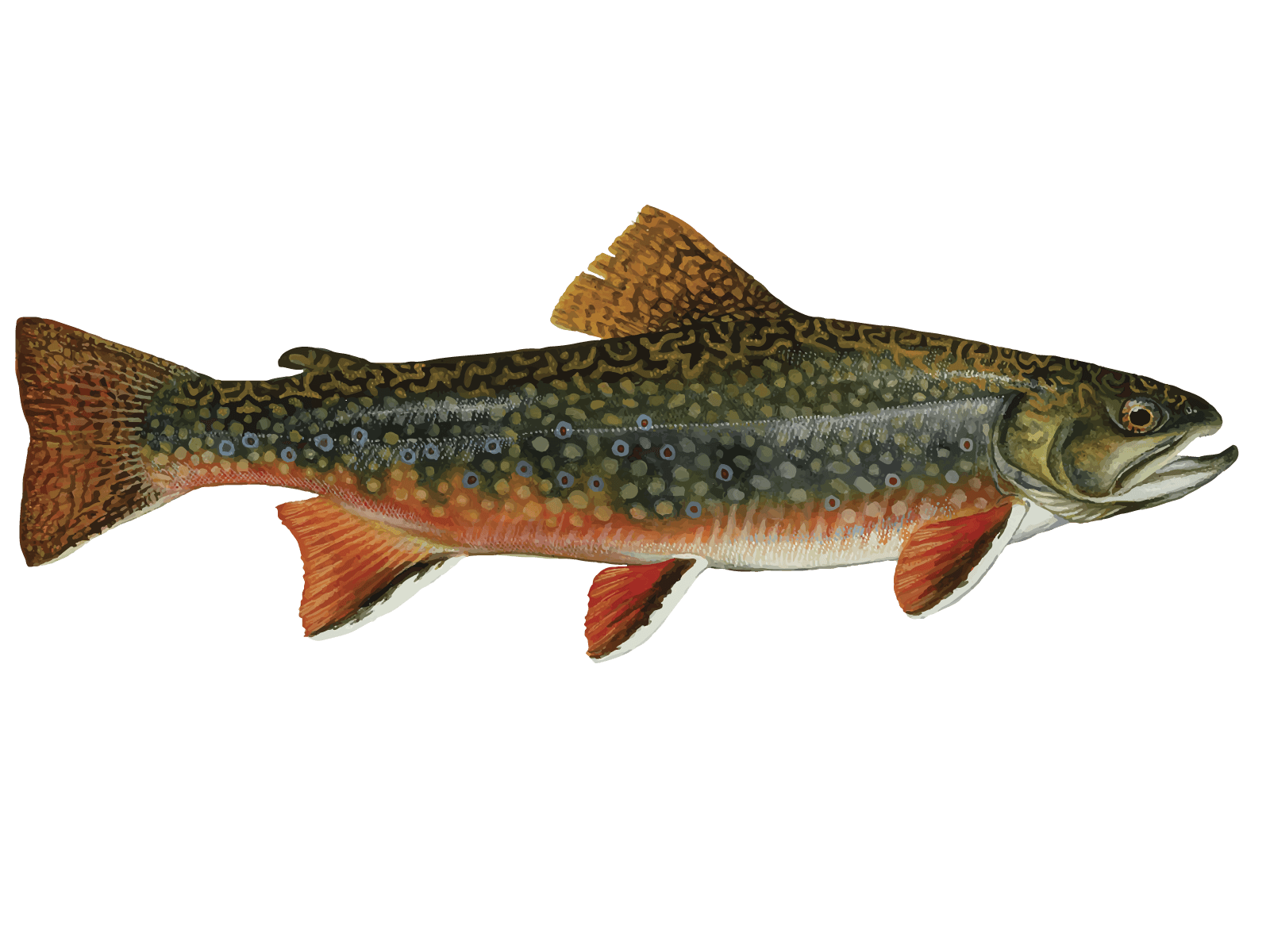
The Brook Trout (Salvelinus Fontinalis) is a stunning and spirited freshwater game fish belonging to the family Salmonidae and the order Salmoniformes. These remarkable fish are instantly recognizable by their distinctive coloration: an olive-green back adorned with yellow spots, a milky brown belly, and signature red or orange spots circled with blue rings running along their sides. What truly sets Brook Trout apart are the wavy stripes rippling across their back and head, which elegantly extend to their dorsal, adipose, and caudal fins. Perhaps most striking are their pink lower fins, elegantly trimmed with white and black streaks. Native to the cold, clean waters of northeastern North America, Brook Trout have captivated anglers and nature enthusiasts for generations. These fish serve as indicator species for water quality, thriving only in pristine environments—a testament to their intolerance of pollution. With an average lifespan of about 5 years and the ability to transform dramatically during spawning season when males develop humped backs and brilliant coloration, Brook Trout represent one of the most beloved native species in freshwater ecosystems across the Northeast and beyond.
Brook Trout Habitat and Distribution
Brook Trout are heavily concentrated throughout the northeastern United States and Canada, where they are native to countless streams, rivers, and lakes. Their natural range has expanded over time through deliberate introductions, and today you'll find thriving populations in the Great Lakes region, scattered throughout Canadian Maritimes, and in pristine waterways across Labrador and Newfoundland. These fish prefer cold, clean water environments—specifically temperatures below 68°F—making them sensitive indicators of environmental quality. They inhabit ponds, creeks, small rivers, lakes, and streams, though they show a distinct preference for cooler, well-oxygenated waters. Because Brook Trout are highly intolerant of environmental changes and pollution, their presence in a water system is an excellent sign of ecological health. They tend to hide in shallow areas near fallen trees, boulders, and undercut banks where they can ambush prey while remaining protected from predators.
Brook Trout Size and Weight
Depending on their specific habitat conditions, available food sources, and water quality, Brook Trout can grow quite impressively. Most fish typically range between 10 to 24 inches in length, weighing anywhere from 1 to 9.5 pounds on average. However, in exceptional circumstances and particularly well-managed waters, larger specimens have been documented reaching up to 34 inches and weighing as much as 10 pounds. The variation in size is largely influenced by water temperature, nutrient availability, and population density within their habitat. Younger, stream-dwelling fish tend to be smaller, while lake-dwelling populations often achieve greater sizes due to increased food availability and more stable environmental conditions.
Brook Trout Diet and Behavior
Brook Trout are opportunistic feeders with diverse dietary preferences that change based on what's available in their environment and their own size. Younger and smaller fish primarily consume aquatic insects, worms, leeches, small minnows, and crayfish, carefully hunting through vegetation and rocky structures. As they grow larger and more aggressive, their diet expands to include amphibians, larger fish, and occasionally small terrestrial prey such as mice, voles, lemmings, and shrews. These fish are particularly active during early morning and late evening hours, when they venture into shallow feeding zones to hunt. They're known for their explosive strikes and acrobatic fighting ability when hooked, making them exhilarating adversaries for anglers. Despite their small to medium size, Brook Trout display remarkable courage and aggression, often taking flies and lures with abandon when feeding conditions are favorable.
Brook Trout Spawning and Seasonal Activity
The spawning season for Brook Trout begins in late fall and continues through early winter, typically occurring between September and November depending on water temperature and geographic location. During this critical period, female fish actively seek out suitable spawning grounds characterized by clean, loose gravelly bottoms in streams and rivers. Once a suitable location is found, the female deposits her fertilized eggs, which are then carefully covered with gravel to protect them from predators and maintain stable conditions. These eggs remain dormant throughout the winter months, developing slowly in the cold water. By spring, the eggs hatch into tiny alevins, and the juveniles gradually transition to shallow water where they can find abundant food and protection from larger predators. This seasonal pattern makes late fall an exciting time for anglers, as spawning fish often display enhanced colors and increased feeding activity in preparation for the demanding breeding season.
Brook Trout Techniques for Observation and Capture
Fly Fishing Method: Fly fishing is the preferred and most effective technique for targeting Brook Trout, particularly in small streams and remote waterways where these fish naturally thrive. A long fly rod provides the precision and control necessary to delicately place your fly into tight, difficult-to-reach spaces—under overhanging tree branches, behind fallen logs, and into narrow pockets between rocks. The key is developing smooth, accurate casting motions that allow you to present dry flies, nymphs, or small streamers without spooking these cautious fish. Early morning hours typically yield the best results, as Brook Trout are most active during low-light conditions when insect activity peaks.
Spinning and Bait Method: For anglers preferring conventional gear, a spinning rod equipped with small spinners, plugs, and spoons proves highly effective. A snelled spinner rigged with a live worm is a classic combination that consistently produces results, as is the combination of jigs with live insects or minnow presentations. Small, natural-looking lures that mimic the forage fish and aquatic creatures that Brook Trout naturally hunt work exceptionally well. Cast near cover such as boulders, submerged logs, and vegetation edges where these fish typically hide.
Location-Specific Tip: Around northeastern hotspots like Maine and the Adirondacks, focus your efforts on small, cold-water streams that drain from higher elevations. These pristine waterways consistently hold wild Brook Trout populations. Early season spring fishing, immediately after ice-out, and fall fishing from September through November offer the most productive opportunities when water temperatures remain optimal.
Brook Trout Culinary and Nutritional Notes
Brook Trout are considered excellent eating fish, prized for their delicate, mild flavor and firm, flaky flesh. The flesh typically displays a subtle pink or reddish hue, particularly in wild specimens, indicating excellent nutritional quality. These fish are rich in omega-3 fatty acids, high-quality protein, and essential vitamins and minerals, making them a healthy dietary choice. Their small to medium size makes them ideal for whole-fish preparations such as pan-frying or grilling, which allows the delicate flavor to shine. In many regions where Brook Trout are abundant, they're considered a delicacy worth traveling to experience. Sustainable fishing practices and size regulations help ensure these native populations remain healthy for future generations to enjoy both on the water and at the dinner table.
Brook Trout Frequently Asked Questions
Q: What is the best bait or lure for catching Brook Trout?
A: Small spinners, plugs, spoons, and flies work exceptionally well. For live bait, try worms, minnows, live insects, crayfish, and leeches. A snelled spinner combined with a live worm is a proven combination that consistently produces strikes from hungry Brook Trout across diverse water conditions.
Q: Where can I find Brook Trout near northeastern fishing destinations?
A: Brook Trout are native throughout the northeastern United States and Canada, with particularly strong populations in Maine, Vermont, New Hampshire, the Adirondacks of New York, and throughout Canadian provinces like Ontario, Quebec, and the Maritime regions. Look for small, cold, clear streams and spring-fed lakes where water temperatures stay below 68°F year-round.
Q: Is Brook Trout good to eat?
A: Absolutely! Brook Trout are considered excellent table fish with delicate, mild, flaky flesh. They're rich in omega-3 fatty acids and high-quality protein. Their small to medium size makes them perfect for whole-fish preparations like pan-frying or grilling, and the eating quality is often superior to hatchery-raised fish due to their natural diet and pristine habitat.
Q: When is the best time to catch Brook Trout?
A: Spring (immediately after ice-out), early summer mornings and evenings, and fall (September through November) offer the most productive fishing. Brook Trout are most active when water temperatures are cool and stable, typically below 65°F. Dawn and dusk hours consistently outproduce midday fishing throughout the season.
Q: Why are Brook Trout used as indicator species for water quality?
A: Brook Trout are extremely intolerant of pollution, warm water, and environmental degradation. Their presence in a water system indicates clean, cold, well-oxygenated conditions. Conversely, their absence suggests environmental problems. This sensitivity makes them valuable biological indicators for monitoring ecosystem health.
Q: What makes Brook Trout different from other trout species?
A: Brook Trout are distinguished by their unique coloration patterns, including red and orange spots circled with blue, wavy stripes on the back and head, and pink lower fins with white and black trim. Unlike larger Rainbow Trout or Brown Trout, they prefer smaller, colder streams and are native to northeastern North America. They're also more sensitive to environmental changes and water temperature fluctuations.